
Ricoh ADF Scanners with Integrated Flatbed
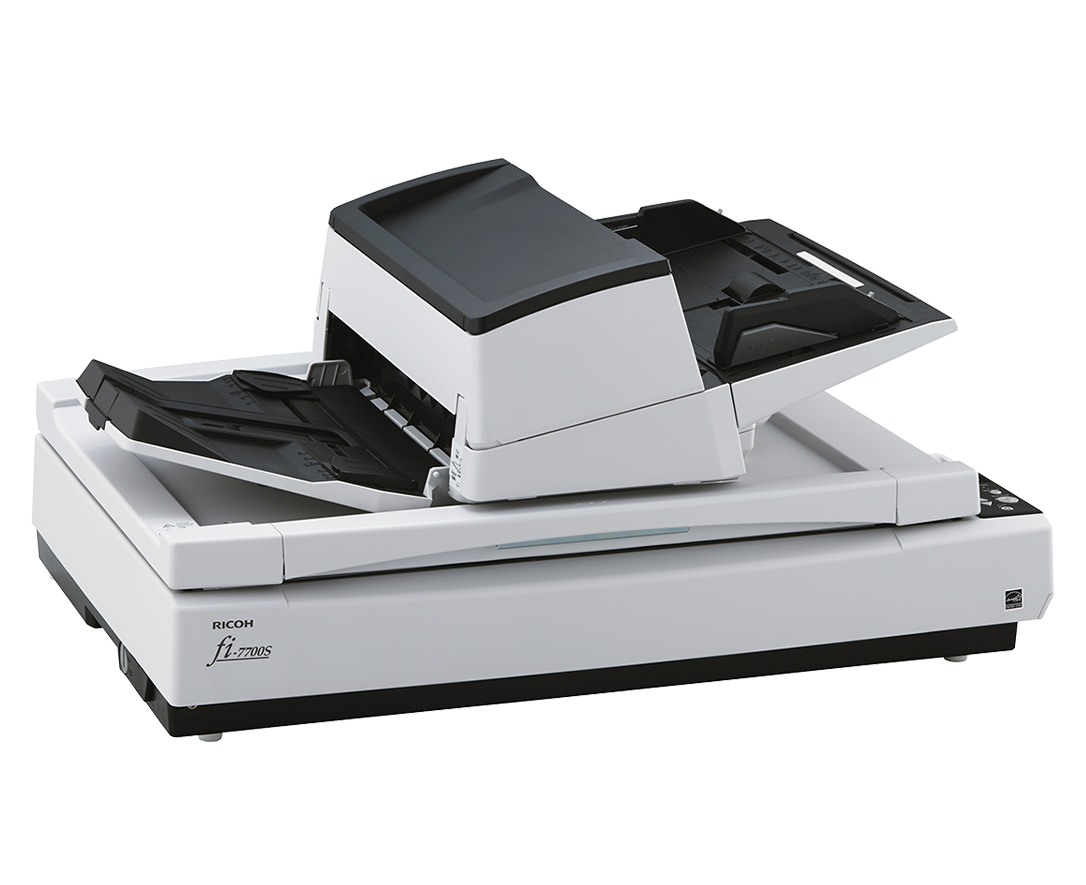
In short: Five models pairing a duplex feeder with an integrated flatbed: fi-7700 and fi-7700S with an A3 bed, fi-8270 and fi-8250 at A4, and the fi-8250U for a single USB workstation. The feeder takes the loose paper; the glass takes everything that must not be fed.
For the busiest mixed workload, the fi-8290 at 90 ppm sits above this group. If your files are clean loose sheets only, a desktop ADF costs less and does the same job.
The awkward twenty per cent is the point
Every records office has a pile the feeder cannot take — stapled sets nobody will dismantle, passports, receipts, brittle pages. In practice that pile does not get scanned: it waits for a trip to a flatbed in another room, and then waits longer. One machine with both paths is what makes a file complete rather than mostly complete.
On the feeder side the usual protections apply: duplex capture in one pass, ultrasonic double-feed detection so pages are never silently skipped, and paper-protection sensing that stops the transport before a sheet tears.
Sort
Loose sheets to the feeder; stapled, bound and fragile items to the glass.
Feed
Duplex capture of everything that can safely travel.
Place
Passports, receipts and torn pages scanned flat in the same batch.
Output
PaperStream Capture to searchable PDF, PDF/A or TIFF.
Ricoh ADF + Flatbed Scanners at a glance
Figures from the manufacturer's published specification. Confirm current options and configuration with our quotation.
The Ricoh fi-series by class
Daily volume sets the class; what is in the file decides whether you also need a flatbed or A3.
A flatbed is not a book scanner. Bound volumes, tight spines and rare material belong on an overhead cradle scanner
Government buyers procure through GeBIZ, where Micrographics Data is a registered supplier.
Which model should we pick?
Start with the flatbed size: A3 if oversize or bound-flat items appear, A4 otherwise. Then match feeder speed to daily volume, and choose USB or network connectivity by how many people will use it.
What is the difference between the fi-7700 and fi-7700S?
The S is the simplex variant — it captures one side per pass. If your documents are printed both sides, the duplex fi-7700 saves far more time than the price difference.
Can we scan books on the flatbed?
A slim booklet, page by page, yes. But the glass is flat and pressing a spine down to flatten it damages bindings. Bound, valuable or tight volumes belong on an overhead book scanner.
Is the flatbed really necessary?
If your files contain staples, passports, receipts or torn pages, yes — and the honest test is whether staff currently set items aside rather than scanning them. That pile is what the flatbed is for.
How much do they cost?
Quoted per model and configuration, installed. Micrographics Data issues a written quotation, and a GeBIZ quotation for government agencies and statutory boards.
Show us a typical file
We demonstrate on your own documents — feeder and flatbed both — and quote the right model installed.