
MS Handheld Ultrasonic Welder
In short: A handheld tool that welds polyester film to itself using ultrasonic vibration instead of adhesive or a heated bar. Because the weld is made point by point under hand control, it goes where a bench sealer cannot — around corners, into a mount, along an irregular edge.
The honest limit: it joins synthetics. Polyester film and encapsulation stock weld; paper, board and natural materials do not. For straight-line production sealing of flat encapsulations, the 1000 Series polyester sealer is faster.
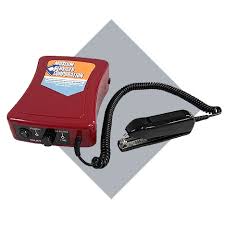
A weld you can steer
Ultrasonic energy vibrates the two film layers against each other until they fuse locally. There is no adhesive to age, yellow or creep, and no heated element sitting against the enclosure, so the document inside is not exposed to standing heat. The join is film-to-film and as inert as the film itself.
Being handheld is the functional difference. Mounts, sleeves, pockets and part-enclosures rarely present a straight 300 mm edge; a bench sealer can only do what fits under its bar. A conservator working by hand can close an irregular shape, add a spot weld to hold a flap, or repair a failed seam without rebuilding the enclosure.
Lay up
Film layers positioned around the object or mount.
Weld
Ultrasonic energy fuses film to film along the chosen line.
Shape
Corners, curves and spot joins closed by hand.
Check
Seam inspected; enclosure trimmed and labelled.
MS Handheld Ultrasonic Welder at a glance
Figures from the manufacturer's published specification. Confirm current options and configuration with our quotation.
Enclosure and sealing equipment
One tool for production runs of flat enclosures, one for shapes and spot work. Studios doing much enclosure work usually keep both.
Ultrasonic welding works on polyester and other synthetics only — paper and board will not weld, and no tool changes that
Government buyers procure through GeBIZ, where Micrographics Data is a registered supplier.
When should we use this rather than the polyester sealer?
Use the sealer for straight-line production: flat encapsulations, repeated sizes, volume. Use the welder where the join is not a straight line — mounts, pockets, curves, corners — or where you need a single spot weld rather than a full seam.
What materials can it weld?
Polyester film and encapsulation stock, and other synthetics on test. Paper, board and natural materials will not weld — this is a tool for making enclosures, not for repairing objects.
Does the object inside get hot?
There is no heated element sitting against the enclosure; energy is applied locally to fuse the film. That said, welds are made at a distance from the object as standard practice, exactly as with any sealing method.
Is the weld as strong as a heat seal?
For enclosure work, yes in practice — the film fuses to itself. The difference is control and geometry rather than strength: a bench sealer gives a long straight seam quickly; the welder gives you a seam wherever your hand can reach.
How much does the MS handheld ultrasonic welder cost?
It is quoted per configuration, delivered. Micrographics Data issues a written quotation, and a GeBIZ quotation for government agencies and statutory boards.
Do you supply the film as well?
Yes — we advise on polyester film stock and weights alongside the tool, so the enclosure material and the joining method are specified together.
What enclosures are you making?
Tell us the film stock and the shapes you need to close. We confirm the welder suits, advise on materials, and quote delivered.