
320 Series Heated Suction Table (HST)
In short: A perforated aluminium suction platen mounted over industrial heater blankets, usable hot or cold. Suction holds the object flat and draws moisture or consolidant through it in a controlled way; heat is added only when the treatment calls for it.
The versatility is the point: one table serves local tear repair on paper in the morning and a lining operation on canvas in the afternoon. Supplied in a range of platen sizes — tell us your largest expected object and the studio footprint available.
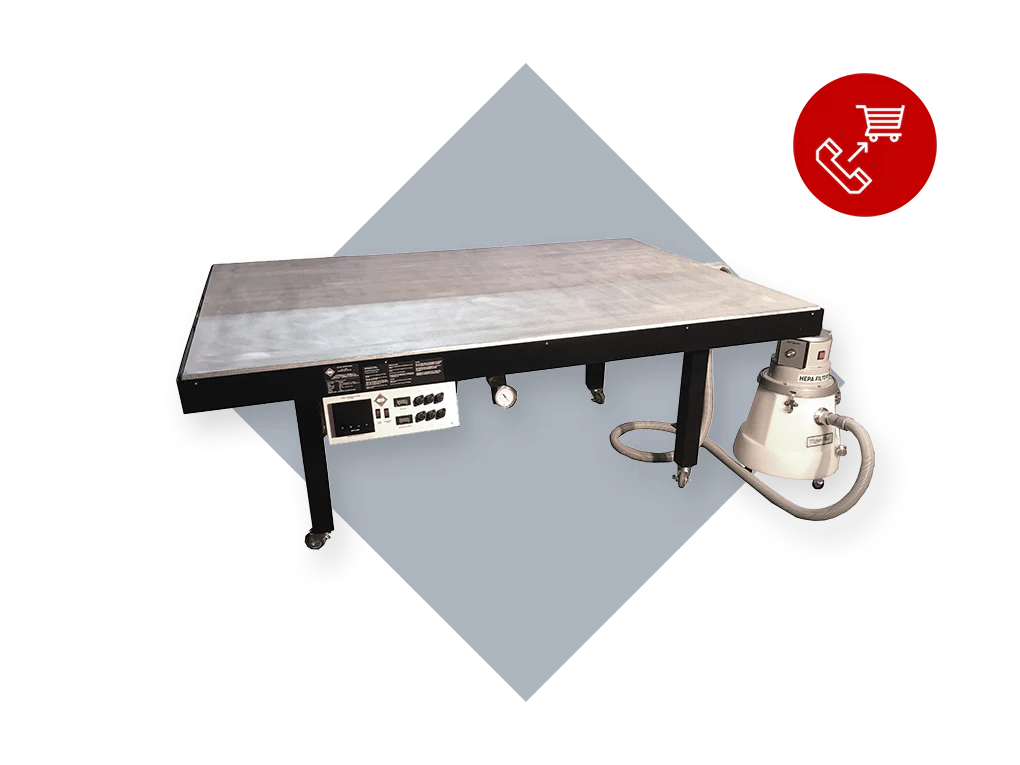
Controlled suction, heat only when wanted
Air is drawn down through the perforated platen, so the object is held flat without weights or clamps and liquids move through the sheet rather than spreading across it. That control is what makes local treatment possible — a tear can be mended or a stain reduced without wetting the whole object.
Industrial heater blankets sit beneath the platen, so the same table works cold for aqueous treatment and warm where a consolidant or adhesive needs heat to flow or set. Running cold is a deliberate mode, not a limitation — many paper treatments should never see heat.
Specify
Platen size chosen for your largest object and studio footprint.
Set
Cold for aqueous work; heated where the treatment requires it.
Treat
Suction holds the object flat and draws liquid or consolidant through.
Dry
Controlled drying under suction, reducing cockling and distortion.
320 Series HST at a glance
Figures from the manufacturer's published specification. Confirm current options and configuration with our quotation.
Conservation treatment equipment
Suction, heat and moisture do different jobs. Choose by the treatment, not by the table size.
Suction and heat are treatment tools, not cleaning tools — surface cleaning happens before the object reaches the table
Government buyers procure through GeBIZ, where Micrographics Data is a registered supplier.
What is a heated suction table used for?
Controlled treatment of flat objects: holding them flat without weights, drawing moisture or consolidant through the sheet rather than across it, and drying under suction to limit cockling. On paintings and textiles it also supports consolidation and lining.
How much does a heated suction table cost?
It is quoted per platen size and configuration, delivered and installed. Micrographics Data issues a written quotation, and a GeBIZ quotation for government agencies and statutory boards.
Why does it need to work cold as well as hot?
Because many paper treatments should never be heated — heat can set stains, affect media and accelerate degradation. Aqueous work is done cold with suction alone. Heat is reserved for treatments where an adhesive or consolidant needs it to flow or set.
What size should we order?
Specify for the largest object you realistically expect to treat, not the average — an object that overhangs the platen cannot be treated evenly. Send your dimensions and studio footprint and we will advise; the 320 Series comes in a range of sizes.
Can it be used on paintings as well as paper?
Yes. The combination of heat and suction is used for consolidation and lining on paintings and textiles, and the same table serves paper work cold. That versatility is usually why an institution chooses a suction table over a single-purpose bench.
How does it differ from a vacuum hot table?
A suction table is built around a perforated platen for treatment through the sheet, usable hot or cold. A vacuum hot table pairs heater blankets with suction hoses and is aimed at lining, infusion and mending of paintings and textiles. If your work is mostly paper, the suction table; mostly lining canvas, the VHT.
What does the studio need to provide?
Power, adequate ventilation for whatever solvents your treatments use, and floor space with working access on the sides you treat from. We advise on services before delivery so the table is not the thing that needs moving later.
Do you provide training?
We brief operators on the equipment — hot and cold operation, suction control and maintenance. Conservation decisions themselves remain with your conservators; we do not advise on treatment choices for specific objects.
What is the largest object you treat?
Send object dimensions, treatment types and studio footprint; we specify the platen size and quote installed.