
Book and Document Leafcaster
In short: Where paper is missing — insect grazing, acid burn-through, a torn-away corner — the leafcaster rebuilds it. The sheet sits over a screen, pulp suspended in water is drawn through, and fibre deposits only where the loss is, bonding to the original edges.
This machine handles single sheets, loose documents and soft-bound material. Losses along folds and spine edges are a different structural problem — that is the Fold & Edge Leaf Caster.
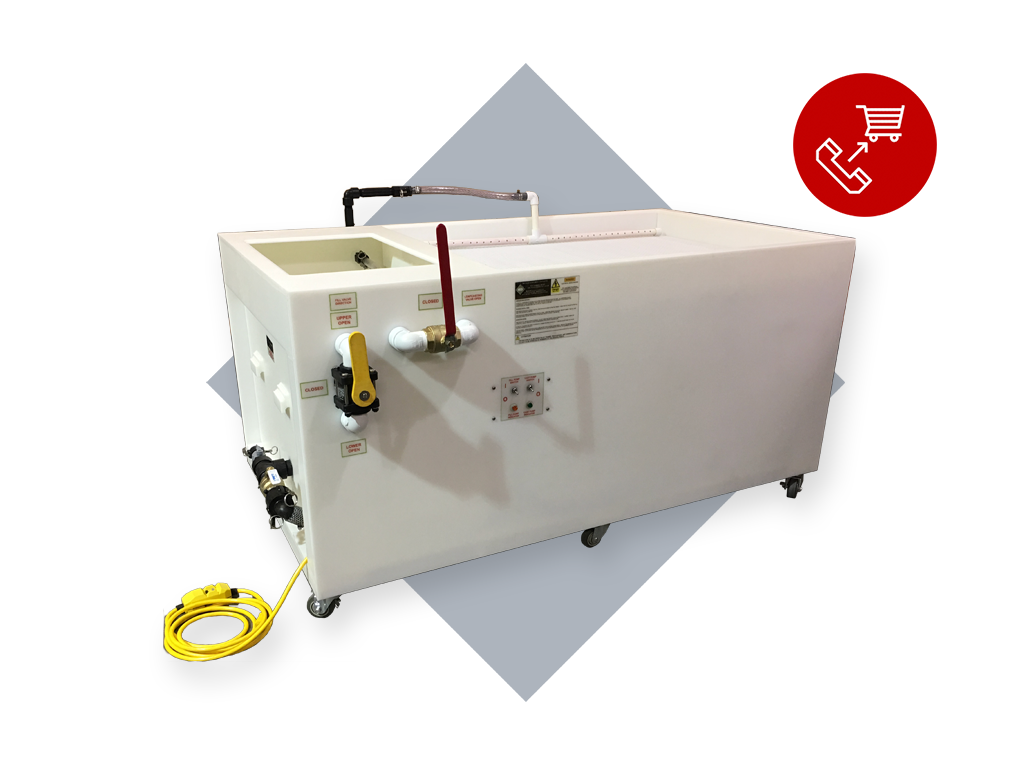
The loss fills itself, because water goes where paper is not
A leaf is placed on the screen and water carrying dispersed pulp is drawn down through it. Where the original paper is intact the sheet blocks flow; where it is missing, water rushes through and deposits fibre. The fill therefore forms to the exact shape of the loss, with an interlocked edge rather than a butt join — stronger and far less visible than a patch cut by hand.
Fill thickness and colour come from the pulp you choose, not from the machine. Conservators match stock, weight and tone to the original, and the honest limit is material: leafcasting works on paper and parchment, not on vellum or heavily sized sheets where fibre will not bond. After casting, objects go to a heated suction table or press for flattening.
Assess
Losses mapped; pulp stock, weight and tone matched to the original.
Position
The leaf is laid on the screen, losses over open area.
Cast
Pulp suspension is drawn through; fibre deposits only in the loss.
Flatten
Dried and flattened on a suction table or press before rebinding.
Book & Document Leafcaster at a glance
Figures from the manufacturer's published specification. Confirm current options and configuration with our quotation.
Conservation treatment equipment
Filling loss, treating through the sheet and washing are separate operations. Most paper studios end up with more than one of these.
Leafcasting restores legibility and structure. How long the fill lasts depends on the pulp stock and storage conditions, not on the machine
Government buyers procure through GeBIZ, where Micrographics Data is a registered supplier.
What is leafcasting?
A repair method in which paper pulp suspended in water is drawn through the loss in a sheet under suction. The intact paper blocks the flow, so fibre deposits only in the gap and interlocks with the original edges. The result is stronger and less visible than a hand-cut patch, and much faster across a large volume of damaged leaves.
What material can be leafcast?
Paper and parchment. Vellum and heavily sized sheets are not suitable — the fill will not bond reliably. If you are unsure what a collection is made of, send a sample assessment and we will say plainly whether casting is the right approach.
Does the fill match the original paper?
That depends on the pulp you select, not on the machine. Conservators match fibre type, weight and tone; a good match is close enough that the fill reads as paper rather than as a repair, but it is a deliberate professional judgement each time.
How long will the repair last?
The equipment restores legibility and structure. Longevity comes from the pulp stock chosen and the storage conditions afterwards — a well-cast leaf in poor storage still degrades. We will not claim permanence for the machine.
What happens after casting?
Objects are dried and flattened, normally on a heated suction table or in a press, before rebinding or rehousing. If the damage came from insects, the material should go through anoxia treatment first so you are not sealing live pests into a repaired book.
How is this different from the Fold & Edge Leaf Caster?
This machine treats flat single leaves and soft-bound material. The Fold & Edge caster is built for losses along folds and spine edges, where the fill has to be placed without collapsing the structure of the section. Studios doing bound conservation usually need both.
How much does a leafcaster cost?
It is quoted per configuration, delivered and installed. Micrographics Data issues a written quotation, and a GeBIZ quotation for government agencies and statutory boards.
What kind of losses are you treating?
Send images and dimensions of typical damage and the volume you expect. We advise on the right caster, pulp supply and flattening step, and quote installed.