
Fold and Edge Leaf Caster
In short: The same pulp-deposition principle as a flat leafcaster, applied where books actually fail: along the fold of a section, in the gutter, and at the spine edge where sewing has torn through. The caster supports the fold while fibre fills the loss.
For flat single leaves and loose documents, the Book & Document Leafcaster is the simpler and faster machine. Studios rebinding damaged volumes usually need both.
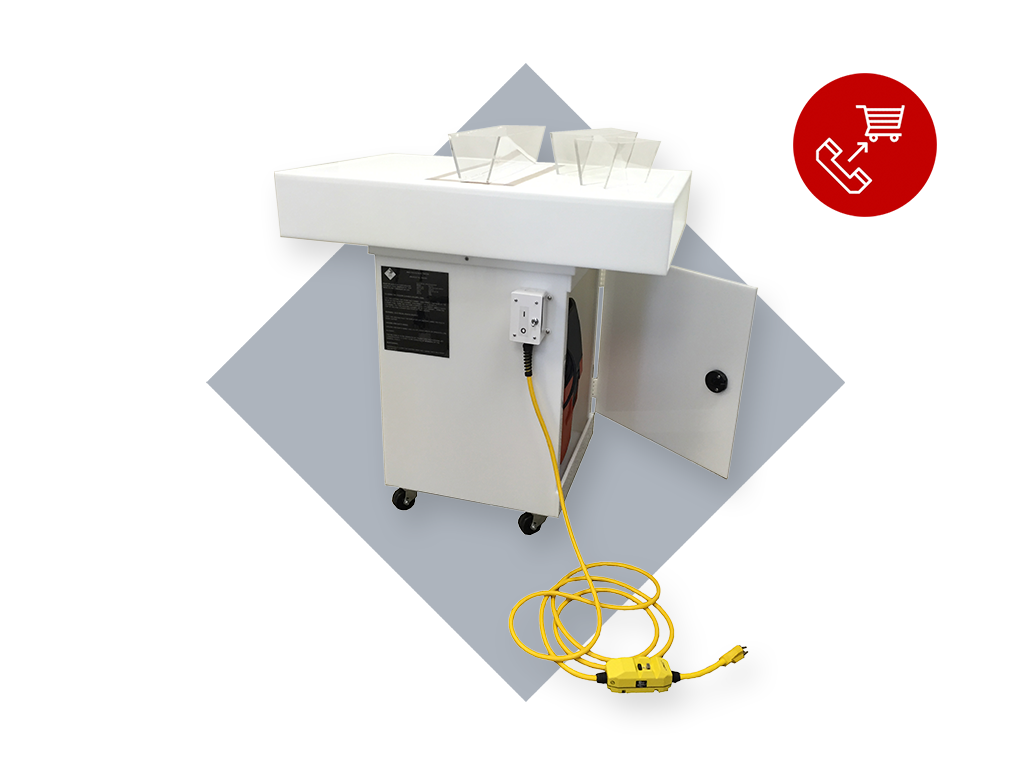
Repairing a fold without flattening the section
A fold is a structural line, not just a crease. Cast a fill across it carelessly and the section either stiffens where it must flex or collapses where it must hold, and the rebound book fails again within a few openings. This caster is built to hold the fold geometry while pulp is drawn into the loss, so the repaired area returns to the swing of the section.
Spine edges are the other case. Where sewing has torn through the fold, rebinding needs material to sew into. Casting new fibre into the damaged edge rebuilds that purchase, and the honest limit is the same as for any leafcasting: paper and parchment bond, vellum and heavily sized sheets do not. Flattening afterwards is done on a suction table or in a press.
Assess
Fold, gutter and spine-edge losses mapped section by section.
Support
The fold geometry is held so the section is not flattened during casting.
Cast
Pulp suspension drawn through; fibre fills only the loss.
Rebind
Dried, flattened and returned to the binder with material to sew into.
Fold & Edge Leaf Caster at a glance
Figures from the manufacturer's published specification. Confirm current options and configuration with our quotation.
Conservation treatment equipment
The distinction is where the loss sits: in the leaf, or in the structure that holds the leaves together.
The caster rebuilds structure and legibility. Longevity depends on the pulp stock, the rebinding and storage conditions afterwards, not on the machine
Government buyers procure through GeBIZ, where Micrographics Data is a registered supplier.
Why does a fold need a different machine?
Because a fold has to keep flexing. A fill cast flat across it will either stiffen the section or collapse it, and the volume fails again in a few openings. This caster holds the fold geometry while the pulp is drawn in, so the repaired area still swings with the section.
Can it rebuild a spine edge enough to resew?
That is the main reason studios buy it. Where sewing has torn through, new fibre cast into the damaged edge gives the binder material to sew into again, instead of relying on guards over a failing fold.
What material can be cast?
Paper and parchment. Vellum and heavily sized sheets are not suitable — the fill will not bond reliably. Send a sample assessment if you are unsure what a collection is made of.
Does the volume have to be pulled apart first?
Fold and edge work is done on sections, so a volume being conserved is normally disbound and resewn as part of the treatment. If disbinding is not acceptable for a particular item, tell us and we will discuss what is realistic.
How long will the repair last?
The equipment rebuilds structure and legibility. Longevity depends on the pulp stock, the quality of the rebinding and the storage conditions afterwards. We do not claim permanence for the machine itself.
How much does a fold and edge leaf caster cost?
It is quoted per configuration, delivered and installed. Micrographics Data issues a written quotation, and a GeBIZ quotation for government agencies and statutory boards.
How are your volumes failing?
Send images of typical spine and fold damage and the number of volumes in scope. We advise on the caster, pulp supply and the rebinding step, and quote installed.